
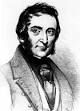
The Annual Graves Lecture commemorates Robert Graves, the eminent Dublin physician. The lecture should serve to foster and promote research in Ireland. The lecturer is selected by the General Council from nominations sought from Fellows of the Academy. It was at a meeting of the General Council held on Friday, 29th January 1960 that the decision to run the “Graves Lecture of the Royal Academy of Medicine in Ireland” was decided. The first lecture started in 1961. The names of the lecturers should be exhibited on a notice board in the Royal College of Physicians in Ireland, 6, Kildare Street, Dublin 2
The subject of the lecture must be of clinical/biomedical interest embodying original research. The lecturer receives the Academy’s silver medal determined by the General Council.
Robert James Graves was born in 1796 to Richard Graves, a fellow at Trinity College and Professor of Divinity. Being the son of a clergyman, he received his degree from the University of Dublin in 1818 and studied in London, Berlin, Göttingen, Hamburg, and Copenhagen. He returned to Dublin in 1821 where he set up a medical practice. In that same year, he was elected to the staff of the Meath Hospital. Another great medical man William Stokes also worked in the Meath.
Graves taught clinical medicine. His particular interest was in teaching his students the responsibility of diagnosis and treatment of ward patients. He said: “From the very commencement the student should set out to witness the progress and effects of sickness and ought to persevere in the daily observation of disease during the whole period of his studies”. Graves encouraged his students to learn the cost of prescriptions so that when they entered practice they could consider a patient’s financial situation when they prescribed the appropriate medicines. Graves was very aware of the impoverished conditions of his patients. He wrote once “Damp straw was used for filling the bed of one of my patients which might have caused him much harm as he was suffering from rheumatism”. Hospitals were not comfortable places in those years. He insisted the only way to learn medicine was at the bedside.
He introduced in his lectures the timing of the pulse by watch and the practicing of giving food and liquids to patients with fever instead of withholding nourishment. Graves said “when I am gone, you may be at a loss for an epitaph for me, let me give you one, in three words: “He Fed Fevers.”
With William Stokes he edited the Dublin Journal of Medical and Chemical Science from 1832 to 1842, a journal he had founded with Sir Robert Kane. His first paper was an account of the outbreak of Typhus fever in Galway.
RJ Graves was appointed President of the Royal College of Physicians of Ireland in 1843. and he was one of the first physicians to fully describe exophthalmic goitre, now called “Graves Disease”.
He died in Dublin in 1853 of an abdominal tumour aged 57 years. William Stokes wrote, “He was once my teacher, later my colleague, always my friend”.
A statue of Graves was erected in Dublin in 1878. It stands in the Royal College of Physicians, 6, Kildare Street, Dublin 2. Graves statue stands in good company in the Graves Hall of Kildare Street. With three other eminent physicians – William Stokes, Sir Dominic Corrigan, Sir Henry Marsh, and Robert Graves. All four statues were commissioned by the Irish sculptor John Foley. Foley died before completing the statue of Graves, and his pupil Albert Bruce-Joy completed the commission.
Robert Graves is buried in the Mount Jerome Cemetery in Dublin and he left his library to Trinity College Dublin. He was a brilliant linguist and well-travelled gentleman who has with his teaching methods of students for the care of the patient given so much to scientific and medical knowledge.[/readmore]
Presenters of the Robert Graves Lectures:
2022 Derek O’Keeffe
- Digital Health: Humans 2.0
2021 Catherine Godson
- Grave Considerations on the Resolution of Inflammation in Health and Disease
2019 Fergus Shanahan
- Robert Graves – when ‘he fed fevers’ he fed the microbiome”
2018 Madeleine Lowery
- Windows of wonder: Insights into the control of human movement
2017 Alf Nicholson
- Towards a more positive view of healthcare in Ireland
2015 Carel W. le Roux
2014 P. Ronan O’Connell
2013 Noel G McElvaney
2012 Eamonn Quigley
2011 Laura Viani
2010 Colm Ó’Moráin
2009 Rose Anne Kenny
2008 Timothy O’Brien
2007 Tom O’Dowd
2006 Michael Elmore-Meegan
2005 Patrick J. Morrison
2004 Mark Lawler
2003 Leonie Young
2002 Gerald H. Tomkin
2001 Owen P. Smith
2000 William Reardon
1999 Kingston H.G. Mills
1998 Conor M. Burke
1997 Cliona O’Farrelly
1996 Malachi J. McKenna
1995 Fergus Shanahan
1994 Dermot P.A. Kelleher
1993 Oliver Fitzgerald
1992 Patrick Michael Bell
1991 John Lionel Waddington
1990 Walter Mac Nicholas
1989 Conleth F. Feighery
1988 G. D. Johnston
1987 Barry Bresnihan
1986 Desmond N. Carney
1985 William H. Hutchinson
1984 T.J. McKenna
1983 John Barry Ferriss
1982 Kevin O’Malley
1981 John Randal Hayes
1980 Joseph Ennis
1979 David A. Powell
1978 Michael James Whelton
1977 Denis G. McDevitt
1976 Edmund Bourke
1975 Keith D. Buchanan
1974 Ciaran F McCarthy
1973 Donald G. Weir
1972 John Ashton Dodge
1971 James J. Fennelly
1970 Robert Gray Shanks
1969 Ian Jesse Temperly
1968 Noel Clarke
1967 James Gerard Devlin
1966 Robert Douglas Thornes
1965 Fergus J. O’Rourke
1964 Francis P Muldowney
1963 Mary Graham McGeown
1962 Peter C. Elmes
1961 Michael Ivo Drury